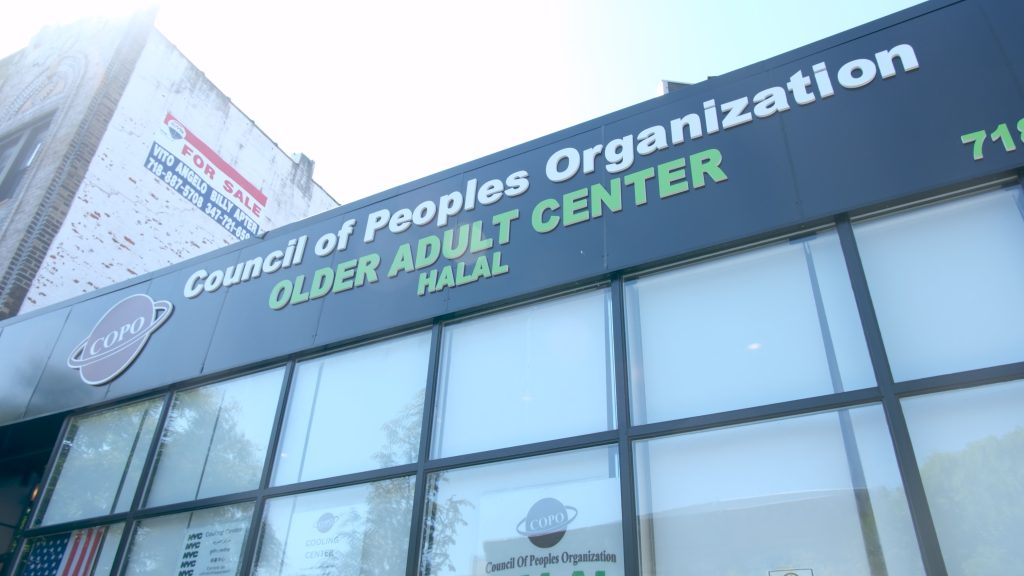
Mohammad (Moe) Razvi knows firsthand that a nonprofit’s investment in property is an investment in the community it serves. As founder and CEO of Council of Peoples Organization (COPO), Moe oversees a network of services that provides stability for immigrant families in New York City as they settle, build wealth, raise the next generation of Americans, and age into retirement.
COPO is of the community, and its decision to buy the facilities it once rented has ensured it will stay in the community, maintaining its vital character against the forces of gentrification and speculative investing. Ownership lowered COPO’s costs, consolidating rent payments on multiple facilities to a significantly lower mortgage payment. And securing a mortgage from a Community Development Financial Institution (CDFI) lender signaled COPO’s reliability to other funders, leading to additional investments from the City.
Nonprofits that own community assets like housing, health clinics, and school buildings help to keep communities rooted and strong. By better understanding the factors that influence nonprofit facility ownership, we can make better decisions about how to support nonprofits in helping communities to thrive.
The state of ownership
Nonprofit Finance Fund’s (NFF) 2025 State of the Nonprofit Sector Survey found that while 32% of nonprofits surveyed own a facility, ownership varies widely across the United States, shaped by factors like budget size, geography, and who organizations serve. And it should be noted that many organizations are balancing more than one workspace, through a combination of leasing, owning, working from home, or working from a sponsored facility.
Operating expenses
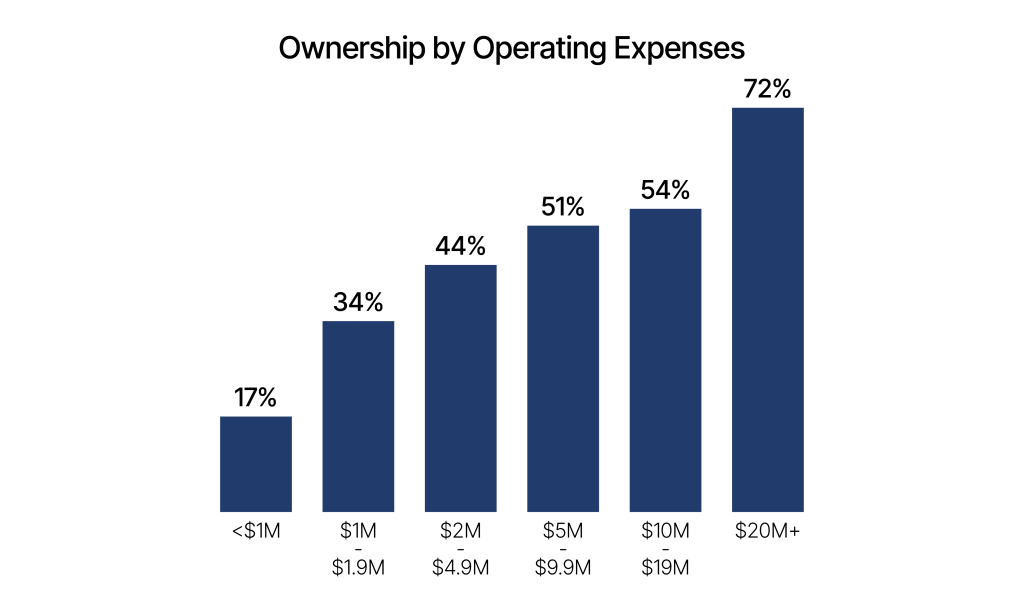
Organizations with bigger budgets are far more likely to own their space. A whopping 72% of organizations with over $20 million in annual operating expenses own a facility, versus 17% of organizations with under $1 million.
Geography
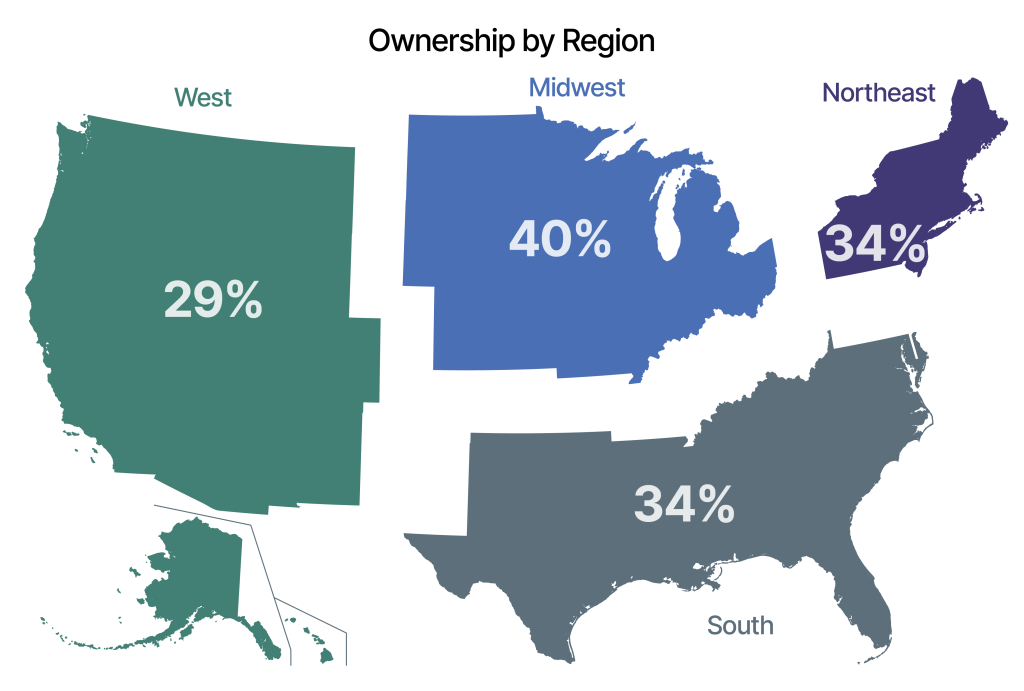
Where an organization is based also makes a difference, with ownership levels highest in the Midwest and the lowest in the West.
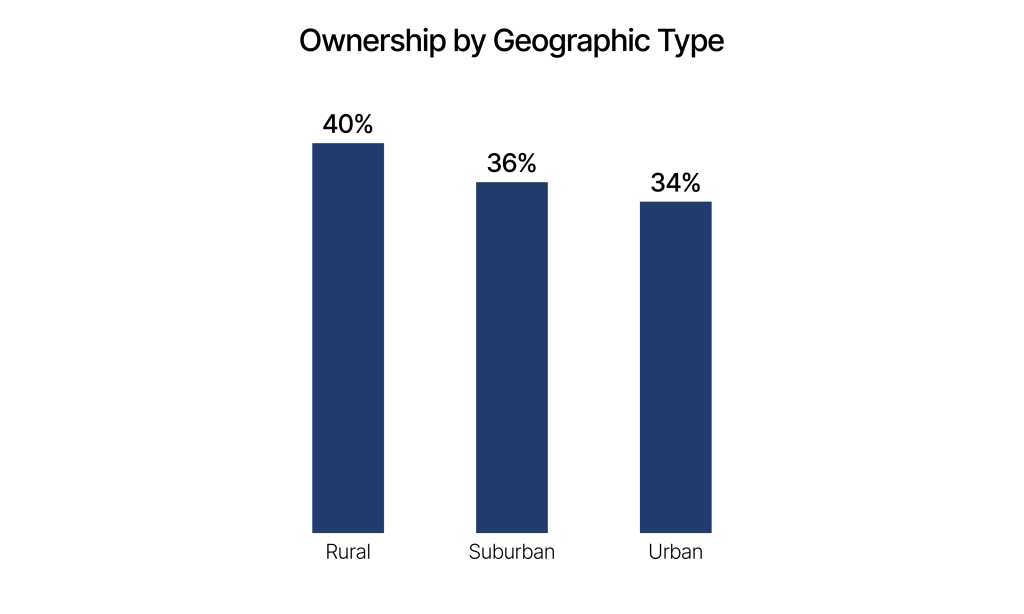
Nonprofits serving rural populations are somewhat more likely to own their own facility versus suburban and urban-serving nonprofits.
Sector
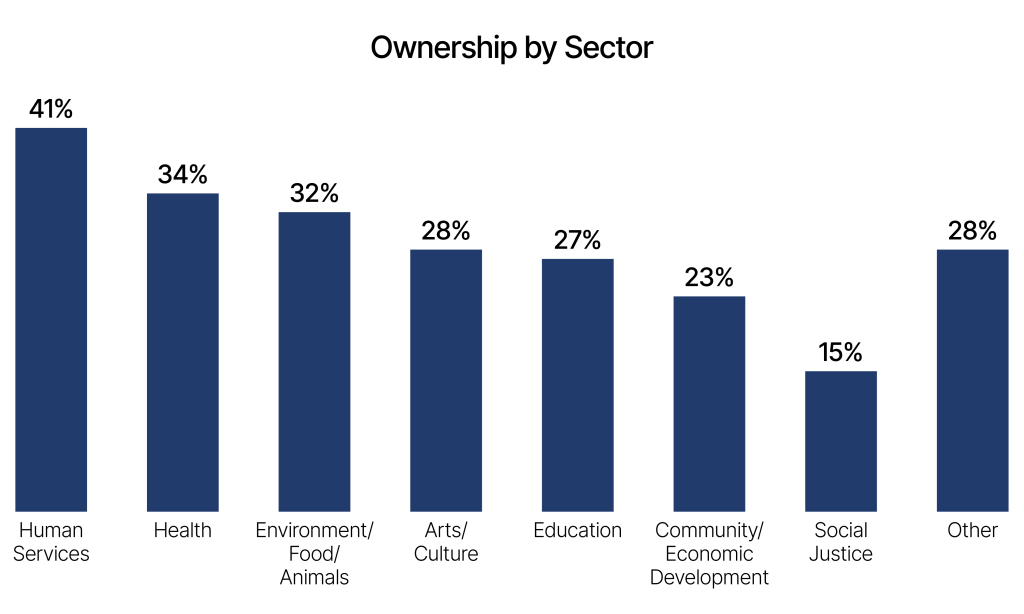
Human services respondents, which tended to have higher operating expenses, were most likely to own a facility (41%); social justice organizations were least likely (15%).
Race/ethnicity
Ownership rates were unequal across leadership demographics. 37% of white-led organizations own their spaces, compared with 25% of people of color-led organizations. These gaps persisted regardless of organizational budget size: Across nonprofits with budgets of $1 million or more, 50% of white-led organizations own their space, compared to 39% of people of color-led organizations.
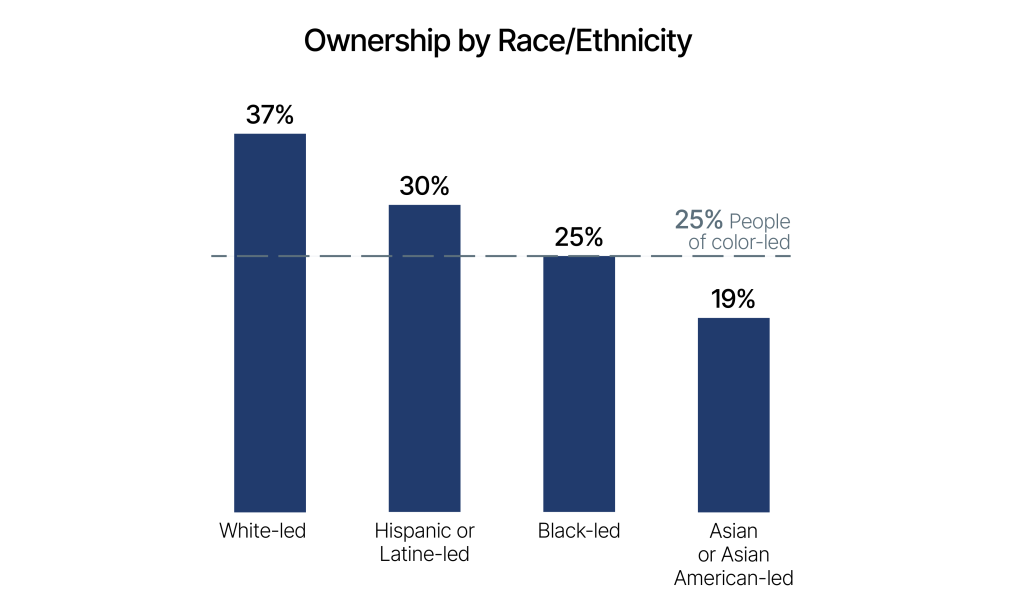
We also found racial disparities in facility ownership connected to an organization’s client base. Among organizations that primarily serve people of color, 29% own their own space, compared to 37% of organizations that do not primarily serve people of color.
Desire for ownership
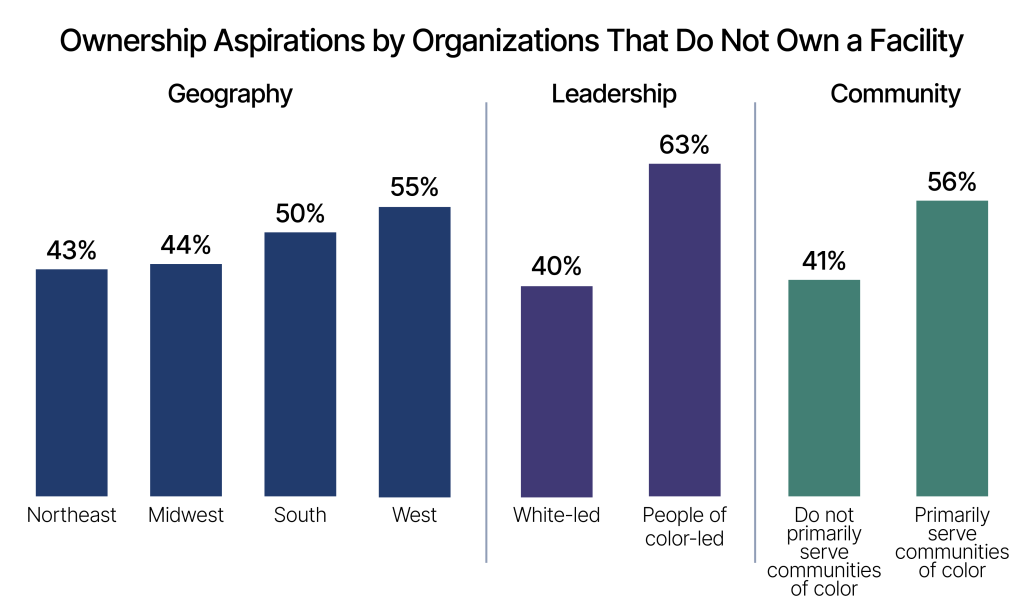
Although only a third of organizations own facilities, our survey found a general hunger for ownership: Half of nonprofits that do not currently own a facility would like to own one.
Here, too, we see differences by geography and race. For example, among organizations that don’t own their facility, a far higher percentage of people of color-led nonprofits aspire to own (63%) versus white-led nonprofits (40%).
Client base matters as well. 56% of non-owning organizations that primarily serve communities of color aspire to own, versus 41% for organizations that do not primarily serve communities of color.
Rationale for ownership
Wealth-building is a well-established motivation for homeownership. Owning real estate helps families build generational wealth [PDF] and achieve stability by relieving the stress of having a landlord or institutional property investor who can raise rents beyond what’s affordable. But the picture is more nuanced for nonprofits, which serve myriad communities with a variety of services.
In terms of perceived benefits of facility ownership, nonprofits were overwhelmingly driven by the immediate needs of the communities they serve, followed by their own immediate financial needs – relieving the stress of having a landlord. Less common – though still prevalent – reasons for ownership were building financial wealth for the organization and for the community, both of which involve longer time horizons and less direct connection to mission.
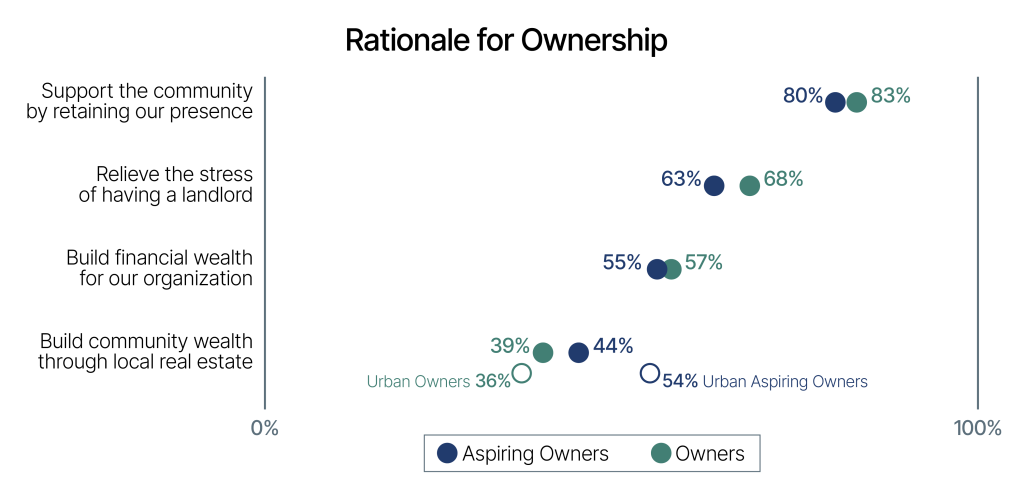
While supporting the community by retaining a presence was a compelling rationale for all nonprofits, smaller organizations and those serving rural areas found it particularly compelling, both among those who own and those who aspire to own a facility. Among those aspiring to own, 85% of people of color-led organizations and 75% of white-led organizations wanted to do so in order to maintain a physical presence in their community.
Existing owners perceived greater benefits to ownership for themselves and their communities than did aspiring owners in three of the four categories. That trend notably flipped when it came to community wealth building. Here, aspiring owners perceived greater benefits. And the gap was especially wide when looking at urban-serving nonprofits, where 54% of aspiring owners cite community wealth building as a rationale for ownership, versus 36% of owners.
Considerations for pursuing real estate
When carefully pursued, facility ownership can have immediate and lasting benefits for both nonprofits and the communities they serve. Here is how NFF is thinking about supporting nonprofits with their facility ownership needs.
For nonprofits
Not every organization needs to own real estate. But as we’ve seen, facility ownership can yield community benefits beyond a nonprofit’s direct services, such as rooting a nonprofit in a particular place, eliminating reliance on a landlord and unsustainable rent hikes, and building community wealth. For too long, organizations have been counseled – including by NFF – about real estate’s risks and significant capacity investments without discussion of these benefits.
Considerations of ownership include cost, mission alignment, community benefits, and many other factors. Interested organizations can check out our Facilities and Equipment Planning toolkit, which has resources for understanding what facilities projects involve financially, considerations for deciding on a facility project, and pitfalls to avoid during facilities projects.
For funders
The long-term benefits of ownership, both for nonprofits and their communities, remain out of reach for many nonprofits. Who owns real estate is shaped by many factors, and philanthropy can play a role in making ownership more attainable, yielding lasting community benefits. Here are some strategies for supporting nonprofits on their ownership journeys:
- Multi-year, flexible support is essential and puts decisions around real estate and community wealth building in the hands of nonprofits – the experts in their communities.
- Capital funding beyond program or operating support can help turn ownership aspirations into reality.
- Full cost funding is critical both to those exploring facility ownership – helping them plan for the future – and current owners – helping them ensure proper upkeep.
For CDFIs
Who controls community assets matters. In addition to owning facilities, nonprofits play a vital role in the ownership economy by promoting individual ownership for residents and preserving assets through an organization that answers to community stakeholders, not profit-seeking shareholders. CDFIs are a critical support for nonprofits investing in new models of ownership. Here are a few examples of work being done by NFF’s financing and consulting clients:
- Philadelphia’s Kensington Corridor Trust uses a Neighborhood Trust model in which property and resources are purchased and held collectively, with the neighborhood governing how the assets are used now and in the future, from small businesses to housing and community spaces. By promoting local ownership, the Trust builds intergenerational wealth, supports locally owned businesses, preserves housing affordability, and preserves community culture.
- Beyond supporting individual property ownership, Little Tokyo Service Center is creating a mixed-use development with 248 affordable housing rental units and 45,000 square feet of commercial space in LA’s Little Tokyo. The project preserves several legacy businesses from the Little Tokyo community and guards against speculative investment by keeping assets under the control of an organization that answers to the Little Tokyo community.
- Sierra House is building and renovating affordable housing in Newark, NJ to ensure these assets remain affordable and under community control in the face of outside developers focused on maximizing profits.
Conclusion
Owning a facility is about more than having a roof over your head; it’s also about building power, long-term stability, and opportunities for community impact. Facility ownership can be a game changer for nonprofits and the communities they serve and deserves careful consideration on the part of nonprofits, investors, and funders.
As our research shows, while immediate considerations around providing services and stability are well understood, there may be less appreciation of the potential long-term benefits of facility ownership to both nonprofits and communities. All of these benefits should be considered as nonprofits explore achieving their facility dreams and funders and investors consider how to make ownership more accessible.
Ready to start? Dive into our facilities and equipment planning resources and full cost resources.
Authors
- Facilities & Equipment
- Financing
- Nonprofit Resilience
- Survey Data & Analysis
- Community-Owned Assets
- Nonprofit Sector