What three years of flexible capital, self-determined support, and peer learning made possible for twenty Colorado nonprofits.
For small community-based nonprofits working to improve health outcomes, multi-year, flexible funding is still rare in philanthropy. When it does happen, leaders have the time and runway to strengthen their organizations from the inside out, rather than chasing the next grant cycle.
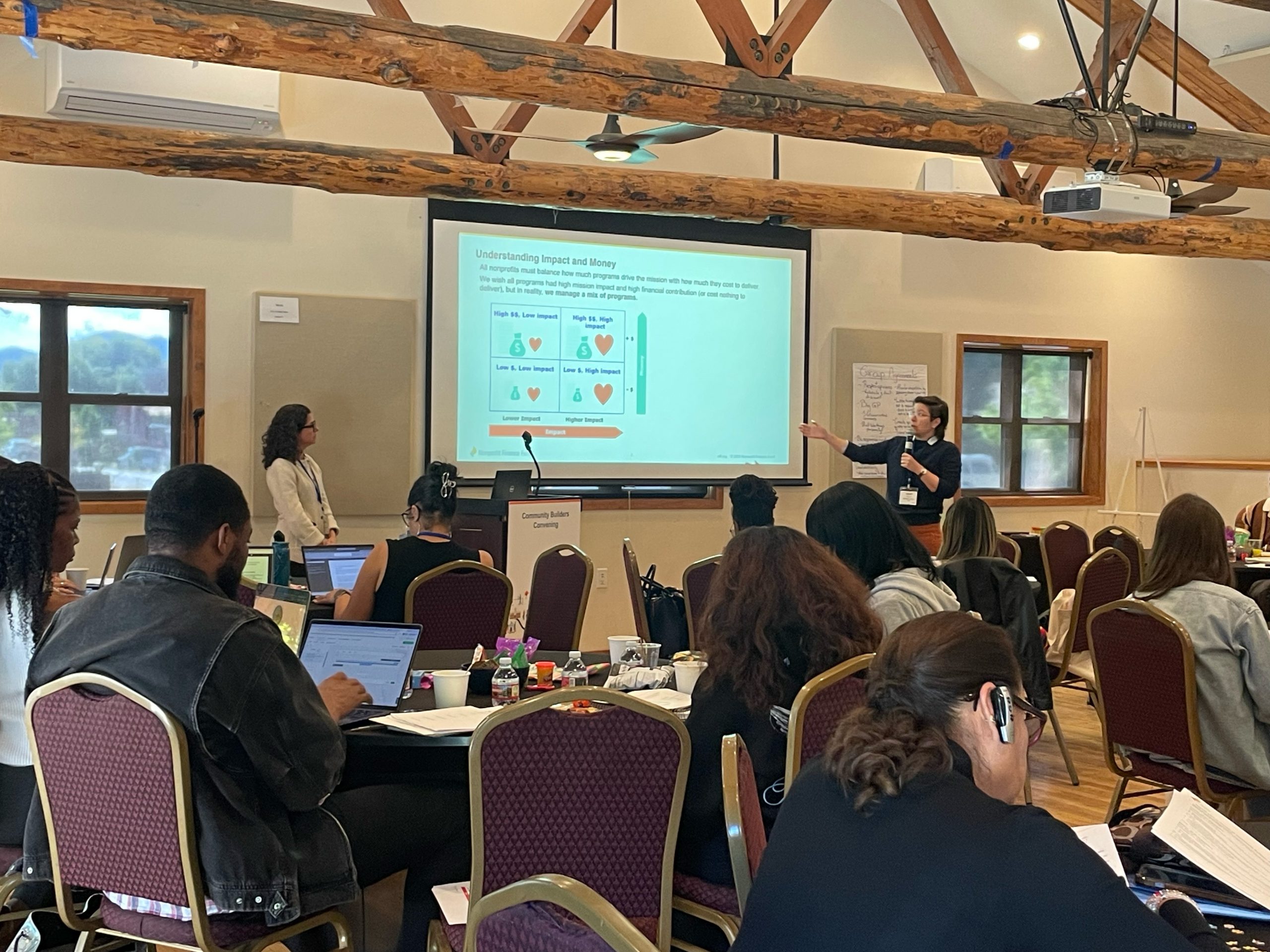
That was the design of Community Builders, which brought together 20 Colorado-based nonprofits working to advance health equity. The initiative, funded by The Colorado Health Foundation, paired three years of flexible, unrestricted operating grants with self-determined technical assistance, peer learning with leaders facing similar challenges, and stipends that valued leaders’ time. By the end, 100% of responding leaders said they are better able to tell their organization’s financial story, 94% reported progress toward their strategic and financial goals, and 94% said the peer network contributed meaningfully to their experience.
At the close of the initiative, NFF recorded interviews with participants, technical assistance partners, and a community-based advisory council member to capture their reflections. Their responses point to the Community Builders initiative as a powerful model for effective longer-term funding and technical support.
TRANSCRIPT
Bathsheba Everett: I think we have the tools, the understanding, and the resources through this experience with NFF to continue to grow the organization.
Elisa Aucancela: We went from being in survival mode to thriving.
Stephania Vasconez: We got several grants because we were able to leverage the NFF funding.
Emily Olsen: This is what we need more of. We need partners who step in and believe in us.
[Text on screen: The Colorado Health Foundation’s Community Builders initiative brought together leaders from 20 Colorado nonprofits for three years of financial training and peer connection.]
[Text on screen: NFF and its partners provided tools, resources, knowledge, and a safe space for leaders to understand and act on their financial needs and opportunities.]
Bathsheba Everett: This is the work I’m called to do, so it’s really difficult to ask for money to do this work. Understanding the value that we bring, and that it’s okay, was really, really important in order to move forward.
Stella Yu: Small nonprofit, startups, it’s like building any other business. You don’t even know what the problems are. You just realize that you’re working yourself to death and you don’t know what could help you.
Bathsheba Everett: We had those conversations, like, “You need to pay yourself,” because I was not taking the salary for the first four years. For Brown and Black communities, that poor, righteous, teacher mentality has been driven into us big time.
Vanessa Roberts: You have the lived experience and expertise in the problem that your organization exists to solve. They have done such incredible work with so few resources. And it’s that beauty of, “I think I have a solution or an intervention that can support my community in moving through this problem. Oh no, I now run a nonprofit!” It’s really, really necessary to remind leaders that they’re learning how to be a nonprofit ED [executive director], and to give themselves a lot more credit for where they are in that journey.
[Text on screen: Leaders put to work the resources and knowledge they gained from this experience, and the results were transformative.]
Emily Olsen: Participating in this opportunity allowed us to develop a new business. We now own ten community solar gardens that not only generate renewable energy for our community, but they also generate income that supports the work that we’re doing. NFF’s support for that not only through, grant dollars and technical assistance, but also just NFF staff being available to us, and answering questions, and being willing to go down this rabbit hole with us and go on the journey with us, was absolutely incredible. I think our budget was $300,000 the year we started, and now it has been over a million.
Elisa Aucancela: We have been, in these three years, growing not only in funding, but also in staff, also in programs, also in more depth of what we want to see for the organization in the future.
Bathsheba Everett: We went from being nomadic and kind of teaching classes out of local studios to actually having our own studio. So when we started, we were serving maybe 350 people annually, to now well over 5,000 people. And that I can absolutely say would not have happened without the mentoring and the coaching and community that we formed through the Community Builders programming.
Stephania Vasconez: We would not be where we are if it wasn’t for the partnership and support of NFF and the whole team. And now I feel very confident to apply for funding, and you know, just that the infrastructure has been laid out.
[Text on screen: The initiative paired flexible, unrestricted funding with self-directed capacity-building support. Leaders’ valuable time was recognized through stipends.]
Charlyn Moss: I think it’s really important that leaders self-determine or co-create the design of their capacity-building support, because they need to be brought in. It helps an organization and their leader understand that if you do invest in this work, we’re supporting you. And it shows that, as funders, we’re now leaning towards supporting an organization leader who is willing to invest in the long-term growth of their organization through participating in deep capacity-building work.
Emily Olsen: Communities have the knowledge to address the challenges they are facing. If we want to see more change, we need more flexible grants.
Stephania Vasconez: The unrestricted funding, I think everybody shouts from the rooftops that that is what we all need. Being able to meet the community needs in real time with funding available that’s not restricted is incredibly valuable.
Dr. Plashan McCune: So I learned more about what a relationship with a funder could look like. To feel validated and supported was amazing, especially when you’re dealing with small organizations with very limited resources – because we want to participate, we want to learn, we want to grow, we want to build capacity.
Emily Olsen: As leaders, our time often isn’t valued. We have a lot of people who are asking for our time, and for our ideas, and for our input. That was a huge part of why we signed up for this opportunity, because we knew that NFF valued our time.
[Text on screen: Three years of sustained investment gave leaders the time to build trust, absorb new skills, and plan for the long term.]
Elisa Aucancela: Having this funding for three years was this consistent, like, “Okay, I can breathe a little bit.”
Bathsheba Everett: We would not have grown in the manner that we did if it was a one-year program. It took months for us to have the trust with each other, to share what we were working on and what our visions were for our organizations. And if it wasn’t for that one-on-one mentoring – that took a full year before I could actually start putting numbers and plugging numbers into the budget projections.
Emily Olsen: We are oftentimes the accountant. We are doing the books ourselves. We are running payroll, and it takes time to learn those skills.
Dr. Plashan McCune: Having the three years where we could say, “Okay, this month I can’t do anything, but next month I can,” it literally reduced the stress and the trauma of having to, feel like you’re on a hamster wheel all the time – go, go, go, figure it out as you go – to be able to kind of slow down and say, “I can dream.”
Vanessa Roberts: When I think about long-term funding investments, they are far less risky than a 12-month grant contract because it’s allowing for the space and time for the work to develop. This funder understands that they are also saving me the time and mental energy of securing this in next year’s budget, so that time and mental energy can go towards the growth of the organization, the stabilization of our systems, the exploration of new partnerships, all of that stuff that can be hard to find the funding for.
Emily Olsen: The changes we are looking to create in our world, that doesn’t happen in a year. If funders really want to see that change happen, we have to have years-long relationships or decades-long relationships if they truly want to see that change. We aren’t going to create affordable housing in a year. We aren’t going to fix the food system in a year. We’re going to fix that in decade-long chunks.
[Text on screen: We know from extensive experience that leaders can feel isolated. The cohort model showed leaders they’re not alone.]
Vanessa Roberts: So often the spaces that executive directors enter, it’s super, super high stakes. You’re representing the entirety of your team, the entirety of your org. You’re the voice of this community. You’re in front of stakeholders. So being in a depressurized context with other executive directors allows you to take the mask off.
Elisa Aucancela: I was so focused on surviving inside my organization that I didn’t have time, or didn’t know there were other leaders who were doing the same thing.
Emily Olsen: Being in a room with individuals who are also in the middle of that experience and going through it and can say, like, “Hey, I’ve had that happen too,” or “Here’s what I did in that situation.” I feel like it grew everyone’s confidence.
Bathsheba Everett: How do you have employee retention? How do we navigate the current political realities that are happening, successfully? How do you do a strategic plan? We’re all struggling with these questions.
Emily Olsen: I do think that NFF did their research to find really qualified technical assistance providers who also valued the same things that our organizations valued. We didn’t have to explain health equity to these groups. We didn’t have to explain language justice. Those were things that these providers already lived and breathed, and they were our champions from day one.
Dr. Plashan McCune: It opened up possibilities and kind of helped us see beyond, what we see every day. What centered us was a care for our community.
[Text on screen: Altogether, this initiative gave leaders what they needed to build stronger organizations and stronger communities.]
Charlyn Moss: Nonprofit organizations are doing impactful work. Why wouldn’t we want to see that grow? Why wouldn’t we want to see the leadership and team grow together? Why wouldn’t we want to invest in the types of things that can help facilitate that growth? You have folks that come alongside an entrepreneur or a business owner to help with things like marketing, operations, HR, just the whole gamut of skills needed to run a company. We’re a little late in the nonprofit sector with being open to providing that type of support to nonprofit leaders who aren’t motivated by profit margin, actually, but who are motivated by serving the people around them. If we want to see things change in the nonprofit sector, I’m like, well, we’ve got to fund the things that can help the leaders of organizations change too.
Stella Yu: We saw that the organizations have become stronger, the leaders have become stronger, because they have increased wages, increased personnel, or facilities. It cements their long-term commitment. They don’t give up so easily. They’ve gone through the really difficult part of things and kind of turned a corner.
Bathsheba Everett: I think we have the tools, the understanding, and the resources through this experience with NFF to continue to grow the organization in a way that we can sustain and maintain for another 30-plus years.
Elisa Aucancela: We went from being in survival mode – ongoing survival mode – to thriving.
Stephania Vasconez: We got several grants because we were able to leverage the NFF funding. So I’m pretty confident to apply to any foundation, at this point, that aligns with our work.
Emily Olsen: Ultimately, I think this is what we need more of for nonprofits, especially small community-based organizations that don’t necessarily have the capacity ourselves to go out and learn these things. We need partners who step in and believe in us and believe in our missions. If we want to see real change, this is exactly the type of support that we need.
[Text on screen: When we invest in nonprofit leaders, their organizations and communities benefit. See more of how we help nonprofit leaders transform their financial situation at nff.org/consulting.]
Thanks to the following video participants for sharing their experience: Bathsheba Everett, Executive Director of Moyo Nguvu Cultural Arts Center; Emily Olsen, Executive Director of Cloud City Conservation Center; Elisa Aucancela, Executive Director of El Grupo VIDA; Stephania Vasconez, Founder & Executive Director of Mutual Aid Partners; Dr. Plashan McCune, Founder & Executive Director of Higher Learning U; Vanessa Roberts, Senior Director of Training & Coaching at The HadaNõu Collective; Charlyn Moss, Founder & CEO of Working Within; and Stella Yu, Advisory Partner.
Community Builders was led by Nonprofit Finance Fund with technical assistance delivered by a network of partners, including The HadaNõu Collective, as well as guidance from a community-based advisory council. Over the course of Community Builders, NFF connected participants with 51 discrete providers across 85 engagements.
Learn more about how NFF’s consulting strengthens nonprofits, grantee cohorts, and community-led initiatives.