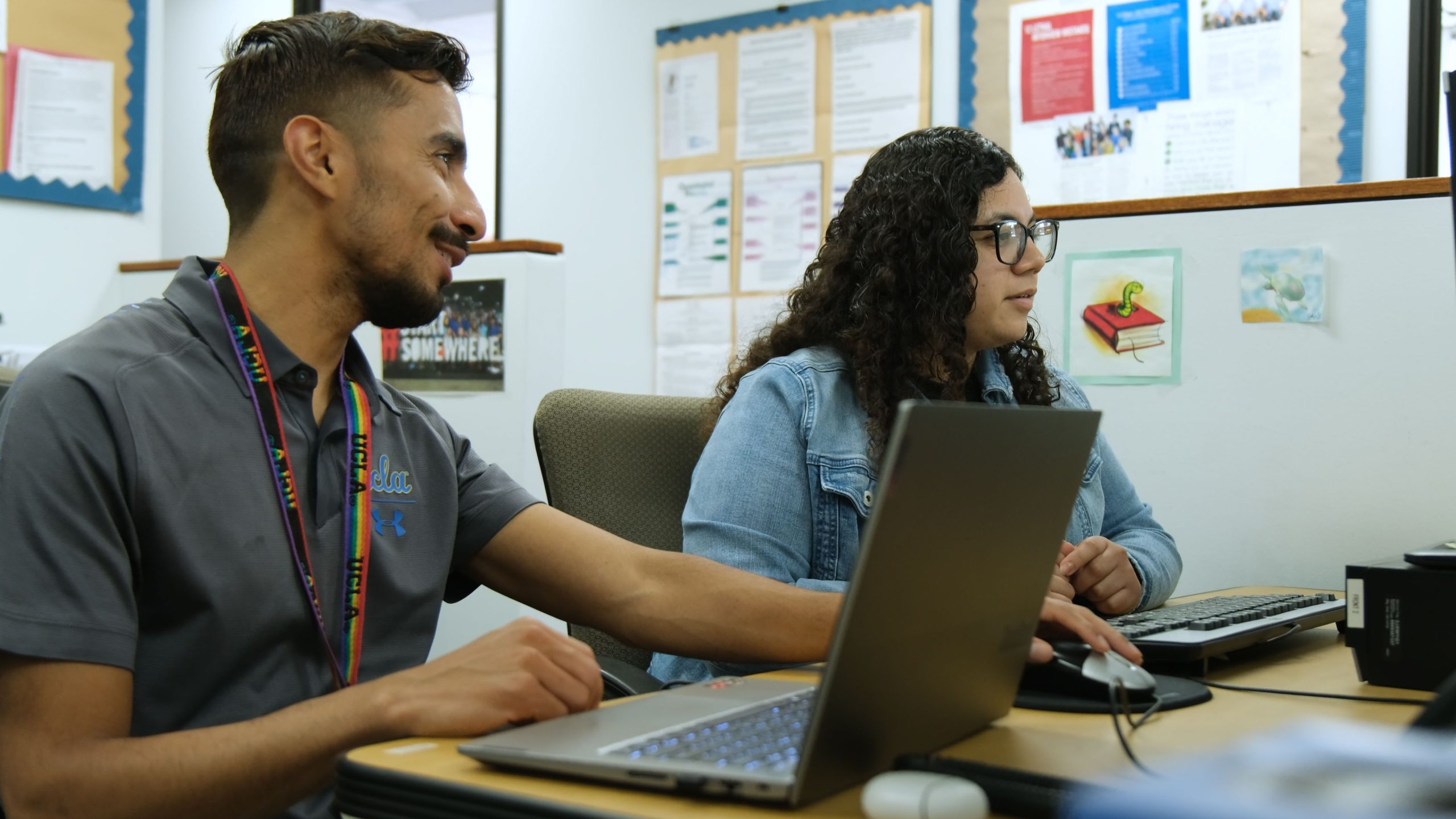
A nonprofit’s mission to support its community is inextricably linked to its ability to retain and support its workers.
Nonprofit workers are the heart of organizations supporting communities across the United States. They’re bright, passionate, and driven, with deep community connections and local knowledge – and the success of nonprofits’ work rests on their shoulders. They’re also often overworked and underpaid, burning out under a funding system that does not adequately address their well-being.
It doesn’t have to be this way. Nonprofits and funders are exploring and modeling new ways of working, funding, and organizing to account for worker well-being and sustain a strong social sector. When workers can meet their financial, professional, and emotional needs, they’re better able to sustain their work and support their communities.
Interested in supporting this work? Let’s connect to ensure the well-being of all nonprofit workers.
The Heart of the Sector
The Heart of the Sector combines in-depth research and practical guidance for supporting nonprofit worker well-being.
A research report documents the challenges and opportunities for building nonprofit worker well-being – with the data and real-world examples to back it up.
A shorter, practical funder guide presents the promising practices nonprofits are implementing to improve worker well-being, and actions funders can take to support them. Both are based on interviews with nearly 50 nonprofit, foundation, and government leaders; analysis of over 70 data sources; and the responses of 500 California nonprofits from NFF’s 2025 State of the Nonprofit Sector Survey.
Case study: Worker well-being among LA youth workforce development nonprofits
Youth-serving nonprofits experience some of the highest rates of turnover in the nonprofit sector, threatening the stability, relationships, and expertise that helps young people to thrive. What does it take to support the well-being of these workers? This video follows staff members of three Los Angeles youth workforce development nonprofits to reveal the challenges they face to meet everyday needs and avoid burnout while continuing to make a positive impact on the young people they serve.
Transcript
Angela Hwang: I am so gratefully a child of nonprofit. Because I was raised in nonprofit, this is something that I really wanted to do, and I’m really passionate about giving back because I know what they could do.
Brenda Sillas: Being around people that provide opportunities for communities that reflect us, it just fulfills me in every sense of the word.
Latea Davis: A lot of our community members, they look up to people who are doing the wrong things. It’s important for them to see someone that’s come from their community, someone of color, a woman, in a leadership role, and they’re still able to position themselves for success.
Sam Joo: If you talk to our young people and say, “What do you appreciate most about being here at Para Los Niños?” They’ll point to the staff. So it’s incredibly important that once we identify a strong, committed staff person, that we do everything we can to ensure that they have a long, sustainable career here at Para Los Niños.
Carlos Peña: Nonprofit workers are often the most dedicated and passionate, who oftentimes share that experience of our underrepresented or underserved youth. The passion is there to help young people, to improve systems, to improve outcomes. But when we realize how much funding we’re lacking to have a long-term, sustained impact, that leads to opportunities for burnout.
Mark Wilson: Understanding the life circumstances that a young person has to go through just to come into our doors every day can weigh on any individual.
Carlos Peña: Nonprofits often have a lot of turnover because of our burnout.
Carrie Lemmon: So if you have this high turnover, you can’t serve the youth who have the highest needs and would most benefit from your programs.
Carlos Peña: If we were better supported, we’d be able to have a more meaningful impact on all the social problems that, you know, the city has, the state has, the country has.
Sam Joo: I think whether you’re for profit or nonprofit, you’re supposed to make people’s lives better. But I think oftentimes the work that we do in the nonprofit sector doesn’t get recognized at the level that the private sector does.
Mark Wilson: The nonprofit still has to function as any other business; the only difference is the tax designation. But our costs are not discounted. We pay the same health insurance, and we have to be competitive with wages.
Selerin Ntahitagabira: The nonprofit is more intensive. You have to be always chasing funds. They also have to have a reserve fund so they can see the future, can incentivize employees.
Carrie Lemmon: Just because you have a charitable mission, it doesn’t mean that you don’t deserve a living wage. When you have that economic stability, you can show up to work and provide your best self to your clients.
Mary Keipp: I think, first of all, a quality job has to be something you like to do. It doesn’t have to be pleasurable every single day, every single minute. But I would not be working at 83 years old if it weren’t something I liked to do.
Brenda Sillas: A quality job would be something that gives you work life balance, that doesn’t allow you to neglect who you are as an individual. Because, as an individual, you have to make sure that you’re taking care of before you can take care of the rest of the community.
Heidi Lemus: Having benefits in this position, it’s important to me. I know it’s there and I can focus on my other work with – working with young adults, and not living paycheck to paycheck.
Annie Chang: Having a salary that allows you to pay your expenses; being able to feel like the services you’re doing, you’re able to spend enough time with the individuals you’re serving, and that you are really helping them towards achieving those outcomes.
Brenda Sillas: L.A. is very expensive and it’s very difficult being in nonprofit to say that you’re getting paid an equitable wage.
Angela Hwang: We’re out here surviving. We’re not living.
Heidi Lemus: I wish I was able to save more. I have two daughters with special needs, and so for me to save, it’s a little harder with the income that I have.
Carlos Peña: Luckily, I’m privileged enough to still live, you know, with family. If I had to live on my own, in the neighborhood that I wanted to, I wouldn’t be able to with my current salary.
Mark Wilson: A lot of our staff live miles away from where they work at, so you can imagine the increased costs.
Erik Aguirre: We’re in this type of field because we care about what type of work we’re doing. Sometimes the workload, might be a little bit too much for what we’re getting paid.
Mark Wilson: I believe added compensation where everyone is paid well does justice for our internal environment, meaning a healthier workplace. And that directly impacts the people that we serve.
Annie Chang: When we look at just the living wage calculator by MIT, we can clearly see that there are certain levels of staff that are not paid enough to be able to sustain their families.
Mark Wilson: Salaries are set sometimes at lower wages where people are pretty much providing the service that they may need as well.
Latea Davis: We do have professionals who go to work every day that are homeless or unable to afford the basic amenities.
Sam Joo: Salaries are oftentimes determined by the funder.
Selerin Ntahitagabira: And when we talk about government grants, they don’t even cover the cost of living increase.
Sam Joo: So I think it’s inviting nonprofits to the table to reexamine that formula on what’s considered a justifiable salary.
Bre Onna Mathis-Perez: As a society, we tend to look to nonprofits when major issues come up, like COVID-19. They had those relationships with communities and were able to get in to be able to provide support. But yet we’re not showing that their staff is valuable. We’re not showing that they deserve to have enough funding to be able to pay livable and competitive wages.
Carrie Lemmon: Nonprofits are producing incredible value for the community. We are reducing poverty. We are helping young people get into employment so that they are less likely to rely on public benefits or end up in the criminal justice system. And those are all savings to government, to taxpayers.
Latea Davis: We have to make sure we are taking care of our staff that we’re relying on to change the lives of our community and make an impact.
Sam Joo: It’s always about, “You don’t get in it because of the salary.” And I think we have to start questioning that notion.
Carlos Peña: I wouldn’t just want to get paid more. I would love to get paid more and be able to do more. And it goes hand in hand.
Mark Wilson: Some businesses’ bottom line is how much revenue is earned every quarter. Revenue is important for all nonprofits. But the double bottom line is the satisfaction of how impactful we are in the community.
Annie Chang: We really think it’s important that the funding sources that are ultimately trying to prevent poverty in our communities are also funding our providers enough so that their own employees are not facing those same barriers.
Supporting worker well-being helps communities thrive
For nonprofit workers to thrive, they need both economic stability and opportunities to succeed personally and professionally. Together, these allow nonprofit workers to sustainably serve the communities they work in, making progress on some of the greatest challenges we face today, like housing, nutrition, education, and healthcare.
This video series brings together industry experts to explore what it takes to support nonprofit worker well-being, how this builds community wealth and well-being, and how nonprofits and philanthropy can forge a better future for nonprofit workers.
Nonprofit Worker Well-being Is Community Well-Being
Transcript
Loretta Turner: Nonprofits aren’t charities, they’re businesses, and they employ people. People that work in nonprofits aren’t just doing this because they’re bored or because they have free time or downtime. They’re doing this because the work is really critical, both to our society but also to them as individuals. And we have to see the people that work behind the scenes not just as passionate folks who have nothing better to do, but as professionals, people who are investing their livelihood into this work. And so they should be invested in as if they’re changing the world, because they are.
Diana Hickey: We are workers who are from the communities that we are working in. It’s important for us to have well-being in our workplace, for us to be able to show up well for our communities, but also so that we can continue to sustain the work.
LaShawn Taylor: Worker well-being in the nonprofit sector is not a singular definition. It really encompasses two things. We’re looking at the economic stability of organizations and individuals, but also what it takes to thrive personally and professionally.
Annie Chang: They have a family to support, they have their own well-being to support as an individual, and we want them to have a job that provides that. But then wellness also means that they can professionally grow and they can build on their own strengths, and that they can become ones that hopefully earn more later, or are in a leadership position. And we think both of those things are really important for wellness.
Loretta Turner: Nonprofits play a critical role in our communities, a critical role in our economy.
Pui Ling Tam: It’s important to support worker well-being because workers power our sector.
LaShawn Taylor: To be able to sustain this work requires all hands to come together to the table, to be able to say, “We care about workers.” And caring about workers means caring about communities.
How Worker Well-being Shapes Community Impact
Transcript
Annie Chang: Staff are at the heart of this work. All nonprofits that are really supporting those in their community, they need staff that represent the community, that understand them – oftentimes have their same lived experience – to be able to do their work and make a difference.
Linda Sanchez: I do see us playing a really critical role in civil society, ensuring that a lot of progress happens within communities that are often at the margins or excluded. And so there is a part of emotional labor. And when we’re not tending to that, that does lead to burnout. That does lead to people leaving the organizations, the workforce. And it does create some real unintended consequences and harm for communities that rely on the services.
LaShawn Taylor: We see that there’s a throughline between nonprofit workers being able to have supports that support their well-being and them being able to show up well-resourced and ready to serve, and that ripple effect, meaning that the people they serve also have access to resources.
Linda Sanchez: And so, for me, it’s equally critical that as we’re thinking about strategic plans, that within that we’re thinking about how do we retain, how do we resource, and how do we ensure that our workforce is really cared for as well.
Diana Hickey: We cannot do this work without being taken care of. Sometimes we don’t think about what that looks like for ourselves, but in workspaces, we should have organizations that think about that, so that we don’t have to burn out, so that we don’t have to consider where we’re not thriving, so that we can show up and enjoy our work, and so that we can show up together as a community.
Linda Sanchez: Oftentimes we think about this as some big strategic new initiative that needs to happen. And sometimes it’s in the micro, right? Like in how we make small changes that then lead to healthy habits in the long term.
LaShawn Taylor: My hope for the future is that nonprofit workers are able to thrive and not just survive, that we’re able to have organizations where all employees are being able to have a living wage to support their dreams and directly impacting communities by being able to show up as their full, authentic selves, free of burnout, free of turnover, and being able to support the communities that they care about.
Why a Living Wage Matters for Nonprofit Workers and Communities
Transcript
Annie Chang: Half of organizations in California are not able to pay all their staff a living wage. And what that ultimately means is that you may have staff that’s front-facing, doing this client work and doing client services that they could probably be on the brink of receiving. And that’s not okay.
Loretta Turner: Passion doesn’t pay the bills. Passion isn’t enough. We really do have to be resourcing the folks that are on the front lines of social justice, of social change, and help them feel like they belong to their work and they belong to the communities that they live in, through well-being.
LaShawn Taylor: You should still expect to earn a living wage to support your dreams, support your families.
Zoë Polk: Overwhelmingly, our workforce – our nonprofit workforce – is women, and women of color are particularly represented there. And if we want to end the racial and gender wealth gap, we must place value on the folks who are helping communities strive and overcome very difficult challenges of the day.
Annie Chang: We want to be a sector that’s not only making an impact on the community, but doing it in a way that reflects our values. And so we should be the sector that’s really showing what it takes to have a workforce that is well cared for, because that’s what we stand for.
Promising Practices: How Nonprofits Are Advancing Worker Well-being
Transcript
The promising practices that nonprofits are doing are: They’re looking at wages in their organization, and they’re trying to understand for themselves what wage equity means. Does that mean a standard floor for how much staff are paid, no matter what position they’re in? Does it mean reducing the gap between the lowest paid and the highest paid staff?
We’re seeing organizations that are increasing their salaries. We’re seeing nonprofits provide well-being resources to their staff, whether it’s wellness days.
It’s four-day workweeks, which is huge, to be able to say, “We’re only going to work for these four days, but get to our outcomes in a really efficient way so that we can rest.”
We’re seeing nonprofits be able to share in collaborative decision-making with their staff, so that leaders aren’t holding all decisions, but staff feel like they have a say in what the future of the organization is.
We’re also seeing unionization, which is really interesting. It’s something that we feel is unspoken right now, but we want to talk about it more, as we’re seeing that that is something that is being brought to the nonprofit sector as one way to really support staff more.
I hope nonprofits after reading this report are inspired to think internally about what are ways that they can lead. And sometimes it doesn’t always feel like they have a lot of ability to lead or do things differently. But we have case studies in this report that show that by listening in to their staff and thinking about ways to address the challenges they’re facing – can happen. And there are folks actively doing this. We really hope nonprofits use this as a resource and as a leverage point for their own work.
Promising Practices: How Funders Are Advancing Worker Well-being
Transcript
For funders, we’re seeing promising practices of providing more multiyear general operating support, which we know is core, so that organizations can make key decisions about what wellness means for their staff.
We’re also seeing funders really checking in on their grantees, asking them, how are you doing? How is your staff doing? What more do you need? And coming at it from a trust-based approach and being able to be their thought partner.
In some cases, it’s also providing well-being grants specifically, with an explicit desire to have nonprofits spend it on wellness.
We’re seeing funders saying, “We’re not the only ones that can address the situation. Our government partners, our public sector partners, our elected officials need to be partners in this, because the ways that nonprofits are supporting communities benefit everyone. And so we all need to be in it together.” And so they’re having their voices heard, too.
My hope is that after funders read this report, they will check in with their grantees on how their staff is doing, not just about how the program outcomes are or how you’re spending down our grant, but how are your staff feeling? They’re experiencing these threats and their communities. How are your staff doing? What more can we do? I think funders being able to see their role in supporting well-being is really important, and I think that this report demonstrates why that is a direct impact on community impact.
How Philanthropy Can Better Support Nonprofit Worker Well-being
Transcript
LaShawn Taylor: Because of the landscape of the nonprofit funding system, because the communities we serve often cannot pay the full cost of what it means to obtain those services, we have to rely on external funders, whether it’s philanthropy or government. And oftentimes, when you think about philanthropic funding, some of the funding that’s connected to restricted grants or just for direct services really doesn’t allow for a nonprofit to support worker well-being in ways that connect to wellness programs, infrastructure, or even salaries. But we’ve seen shifts in that in the philanthropic sector. More funders are looking to engage in supporting worker well-being through funding the full cost of what organizations need around wellness, unrestricting grants, or providing multi-year grants to be able to support longer initiatives around what the organization needs, both for their programs but also for their staff.
Linda Sanchez: I am very proud of the benefits that we offer. I like to think of YO! Cali to be a really good place to work at. That has been made possible by funders who have deeply believed in our work, that have invested in us multiyear, unrestricted funding, because we have been able to use those funds to really leverage internal infrastructure equally as we have been able to support external strategy.
Pui Ling Tam: My real advice to foundations is to try and match our grant dollars, our grant math, with wages. Like, what would a thriving wage be, and what can our grant support that allows for that? And if we need to up our grant amounts to allow for that, then we should take a clear, hard look at our math and make that happen.
Linda Sanchez: It’s really continuing to support unrestricted, multi-year – and when I say multi-year, I say three, five, seven years. Be daring. Right? Don’t limit organizations in what they can do, because they ultimately know where they can have the most impact. And in this work, when things are continuously shifting and changing and pivoting, organizations need to be able to also be adaptable.
Annie Chang: There’s a really important role for nonprofit boards in this conversation as well, because they are folks that are the financial stewards of the organizations, and oftentimes, because they’re not in the day-to-day work, they may not understand how critical it is to take care of staff.
Linda Sanchez: It is everyone’s shared responsibility for us to be able to have a healthy, sustainable workforce.
Learn more about nonprofit worker well-being in our Heart of the Sector report.
Authors
Dana Archer-Rosenthal
Dana Archer-Rosenthal Consulting